
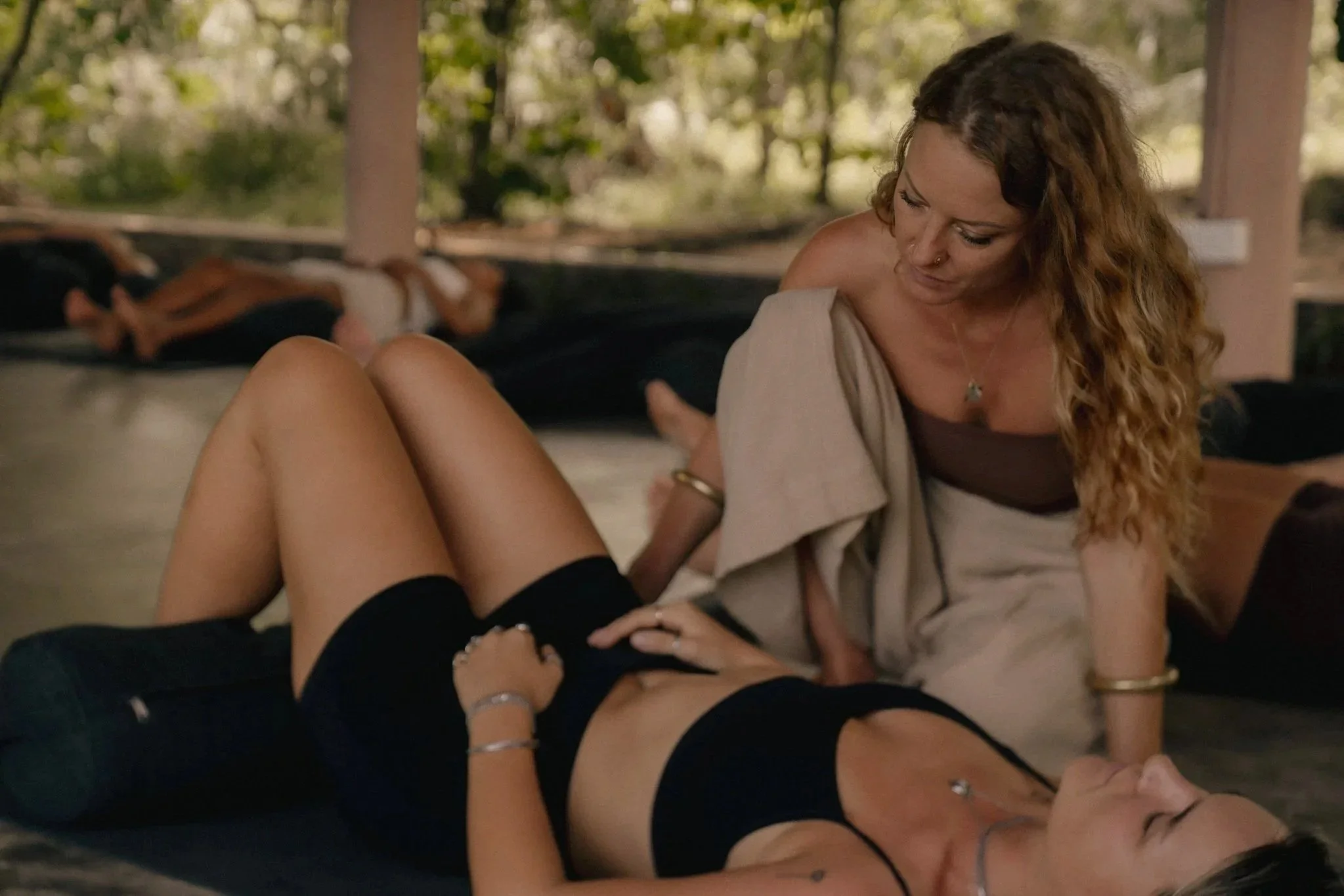
Somatic Breathwork
Breath is the bridge that guides you home.
An invitation to step out of the noise of the mind and return to the body.
So many of us have learned to override our instincts and to push past sensation. We live disconnected from the body and play roles we never knowingly chose. We learn to contain, to perform and to keep pushing through. When life challenges us, our breath becomes shallow. We feel that we do not have room to breathe. And in that same breath, the body doesn't forget. It holds the shape of what we couldn't process at the time, until, over time, it begins to take the shape of everything we've been carrying but have never been able to put down.
The breath asks us to breathe into the belly, to allow the ribs to expand outward, and for the exhale to be able to fully complete itself. When we allow the breath to move through the body and drop lower, something in the nervous system notices and begins, slowly, to allow itself to take up space again.
Breath is woven into our physical, emotional and energetic life, and it carries what we haven't had room to feel :: the nervous system's history, old grief, unexpressed aliveness. As most of us were never taught to listen, the breath continues to carry the weight of this, waiting for a moment to be given the space to be heard.
When we give ourselves permission to breathe into the places that feel numb, tight or guarded, something deeper becomes available. The body gets to speak, and in that conversation, spaciousness arises, a sense of being held, and a reconnection back to yourself that you may not have felt in a long time. When we trust the breath and follow where it leads, it becomes the bridge back into safety, into connection, and into the body itself.
I know this from experience. Breath was how I first made contact with what I couldn't feel, noticing where I was holding, where I was bracing, the situations I simply couldn’t breathe into, and the way my breath would change in different situations. When I began to sit with my breath in practice, I was able to begin to attune to my breath, which taught me how to attune to myself. Breath practice has allowed me to touch the deepest parts of myself that were hidden, longing to be met and held.
Somatic & Concious Connected Breathwork
Somatic Breathwork takes us deeper into the body's own intelligence. Where functional breathing supports regulation and restoration, somatic breathwork invites exploration. In somatic breathwork, we look beyond the mechanics of the breath and look deeper into what the breath carries, the stored tensions, the unfelt emotions, the old patterns the nervous system holds. It creates a space where the body is not managed or overridden but genuinely listened to. Where sensation is welcomed and where what often gets held and carried in silence is given permission to be moved. Breath becomes a direct pathway into what has been waiting to be met.
Conscious Connected Breathwork, the primary practice we work with, is where we breathe in a continuous circular rhythm with no pause between inhale and exhale. This rhythm carries us beyond the thinking mind and into the deeper layers of the body, where old emotions, patterns and stories often live.
As the rhythm establishes itself, something begins to soften, spaciousness opens, and there can be a sense of being held that perhaps you haven't felt in a long time. The body finds its own way because it finally has room to speak. It is a way of coming home.
These practices are not about achieving any particular outcome. There is no right experience, and each breath journey is different. Some sessions bring stillness; others bring aliveness. Some bring a sense of things settling into place; others, a gentle release. All of it is welcome. All of it belongs.
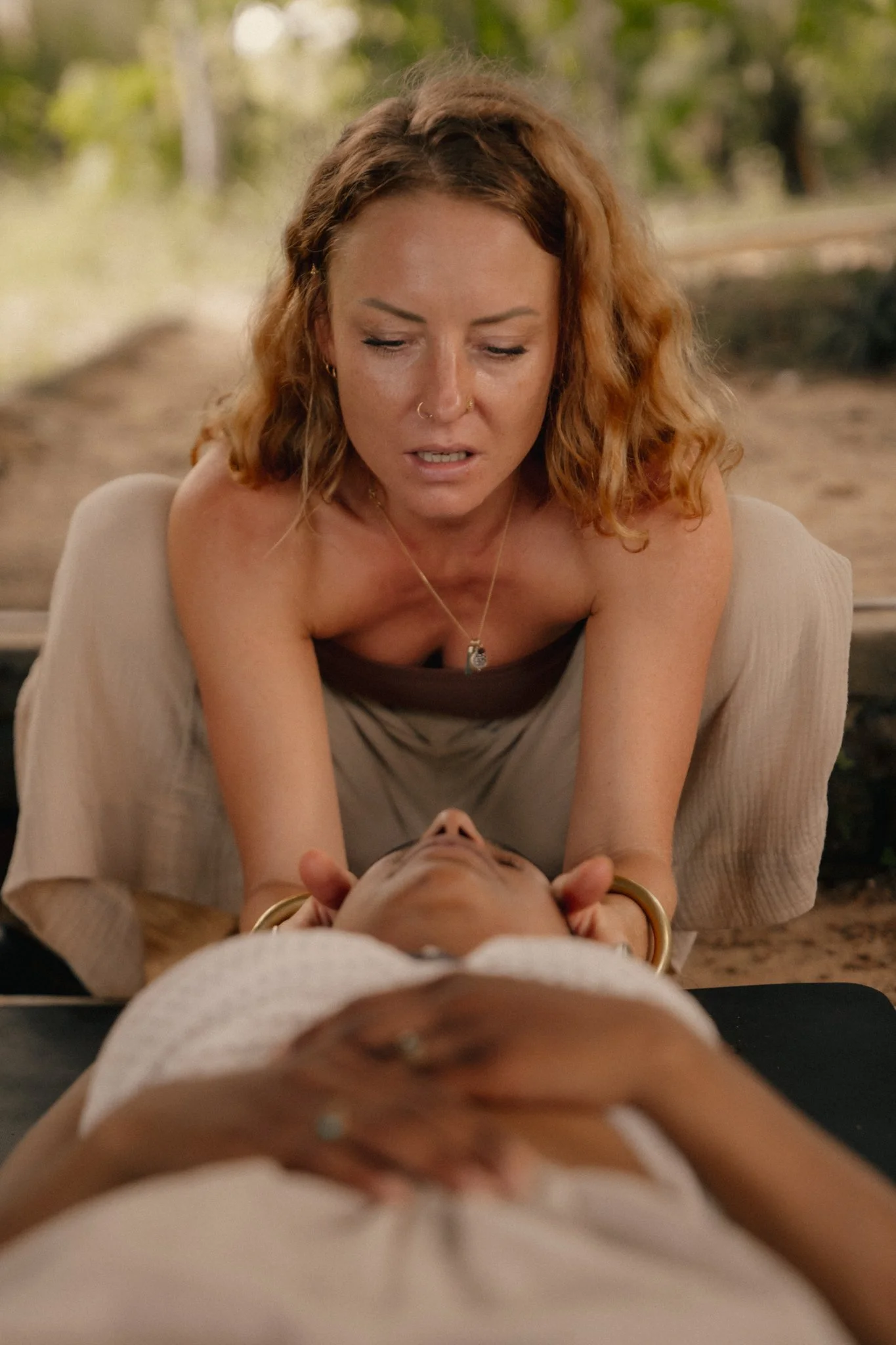
What are the benefits of breathwork?
-
While every journey is different, breathwork has been shown to support a range of physical benefits. By consciously working with the breath, we create space for the body to regulate, recalibrate, and restore balance.
Some of the common physical benefits people experience include:
Improved sleep and deeper rest.
Improved regulation and re-patterning of the nervous system over time. Offering your body new experiences of calm, openness, and capacity.
Greater lung capacity and oxygen flow.
Boosted energy levels and vitality.
Release of physical tension and chronic holding in the body.
Support for digestive and immune function through nervous system repair.
Hormonal balance (especially when practiced regularly).
This is not about quick fixes or perfect outcomes. It's about tuning in, slowing down, and allowing your body to lead the way back to balance. One breath at a time.
Disclaimer:
Breathwork is a supportive and complementary practice, but it is not a substitute for professional medical advice, diagnosis, or treatment. If you have any underlying physical or mental health conditions, please consult your healthcare provider before beginning any form of breathwork. Sessions are offered as a space for self-exploration, healing, and integration rather than clinical therapy. -
When we begin to work with the breath consciously, it becomes a gateway to emotional release and self-connection. Breathwork can help us access and move through feelings such as grief, anger, shame, sadness, joy. Emotions that were pushed down or never given space can begin to soften and shift, without needing to be explained or analysed.
We do not practice breathwork as a way to fix or force. We create space to feel what’s real, in your own time and in your own way.
Practised regularly, over time, breathwork helps us feel more open, present, and emotionally available to life, and to ourselves.
-
Breathwork doesn’t just support gentle emotional release it also helps us to quiet the mind. For many of us, the mental noise is constant: overthinking, self-judgement, looping thoughts, racing anxiety. Breath offers a way, not through logic, but through presence.
As the breath deepens, the mind begins to slow. We move from thinking about life to actually being in it. New insights often arise that are not forced, but felt. Breathwork can help loosen the grip of old thought patterns and create space for clarity, focus, and intuitive knowing.
With regular practice, people often report a clearer head, less reactivity, and a deeper sense of mental spaciousness.
-
For some, breathwork opens a doorway to get in touch with something greater. It can help to connect to spirit, source, soul, or simply a deeper sense of belonging.
In many traditions, the breath is known as more than just air, it is sacred life force, often referred to as prana, qi, spiritus, or simply the wind of the soul.
It is the thread that connects body and spirit, the seen and unseen, the personal and the collective. It is the thread that connects body and spirit, the seen and unseen, the personal and the collective.
In these traditions, the breath is used as a tool to journey, to shift consciousness, to release stagnant energy and to connect with spirit worlds. Rhythmic or intentional breathing is often woven into ceremony, prayer, song, and healing rites. It’s use is not to escape the body, but to deepen presence and open the heart to guidance beyond the logical mind.
Breath becomes a bridge:
Between the physical and energetic bodies.
Between trauma held in the cells and the soul’s capacity to heal.
Between the wisdom of the Earth and the wisdom within a sense of soul, the Earth, spirit, or simply a return to your own inner truth, the breath makes space for it all.
-
So often we've been taught to override the body's messages, to live from the neck up, to treat our instincts as something to manage rather than trust. And the overriding works, for a while, which is exactly why we keep doing it. But the body goes on holding what we haven't had space to feel, memory, emotion, a quieter kind of wisdom.
Breathwork invites us back into relationship with the body as something to listen to rather than something to control. Through conscious connected breathing, the layers that have kept us at a distance begin to soften. As the breath opens, so does the heart, and we come into contact with what has been waiting there, some of it tender, some of it long overdue. Not to escape the body or rise above it, but to be with it as it actually is.
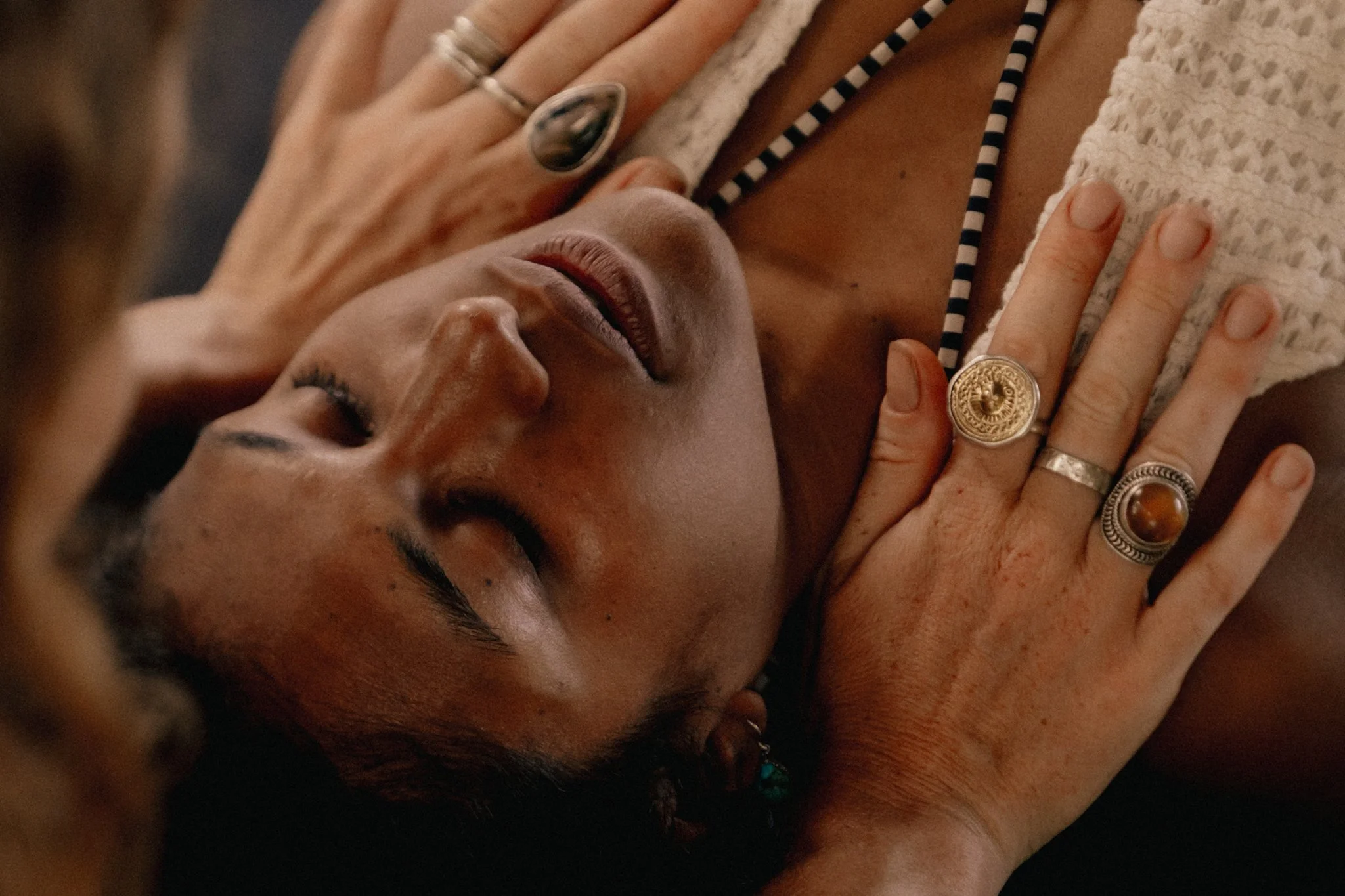
The sacred arrives with the inhale and the exhale becomes the prayer.
The sacred dimension. Breathing the sacred.
In many traditions, from the Vedic to the Taoist, the Tibetan to countless Indigenous lineages, the breath is understood as far more than air. It is a sacred life force, known as Prana, as Qi, as lung. Rhythmic, intentional breathing has been woven into ceremony, prayer, healing and rites of passage for thousands of years, as a way of deepening presence with the body, the self and the soul, and opening the heart to what lies beyond the logical mind.
Breath has always been a bridge :: between the physical and the energetic :: between what the body has been holding and the soul's capacity to meet it :: between the ordinary and the sacred.
To breathe the sacred is the recognition that something sacred is already moving through you, around twenty thousand times a day, whether you attend to it or not. Most of those breaths pass unnoticed. When we slow down and breathe with intention, the breath stops being a background function and becomes a meeting place. The body can begin to soften, and what seemed out of reach can be met with gentle contact through the pacing that the body sets.
You don't need a spiritual framework, prior experience or any particular beliefs to meet the sacred within the breath, because the breath will meet you exactly where you are. And with each breath, we return home.
Every session is intuitively held and grounded in conscious connected breathing. We begin with a check-in to see how you're arriving, what's present and what you're ready to meet. From there you'll be guided through a breath journey with music, verbal support and where appropriate, gentle somatic touch.
There is nothing to do right. Just bring your breath and an open heart.
Breathe with Me
Private Breath Journey – £70
A 90-minute personalised session where we work with conscious connected breath to support emotional release, nervous system regulation, and body reconnection.
Breath & Soma Series – £333
5 sessions that integrate the breath and somatic practice to work deeper and support integration over time. We’ll build a relationship between breath, body and feeling and work with what’s alive for you, whether that looks like emotional blocks, body disconnection or stress and anxiety. Includes space for reflection and tailored practices between sessions.
These sessions are online or in person, in Berkshire/Oxfordshire/London
***If you’re feeling called to this work but finances are a barrier, please reach out. Together we can find a way to make this offering accessible for you.***
To book your appointment, please email me at hello@lilyisobel.com or schedule a free 15-minute call to discuss the best options for you.
Online Breath Community
For upcoming group online sessions please join my online breath community .
Upcoming In-Person Breathes
For upcoming in person events in the UK and abroad, please see my offerings page or sign up to my newsletter to find out more information.
FAQs
-
Each session begins with a short check-in to see how you’re arriving—emotionally, physically, energetically.
We begin through a grounding or connecting exercise that could be the other forms of breath, tuning into the felt sense, somatic movement or embodied exercises.
From there, we move into a guided conscious connected breath journey guided usually with sound. You'll lie down, breathe through an open mouth (or nose in some cases), and be gently guided through the session using music, verbal cues, and intuitive support. If appropriate and always with consent, gentle bodywork designed to support the body through the process may also be introduced.
There’s time to integrate, ground and share at the end. You don’t need to "do" anything right. Just bring your breath and an open heart.
-
Everyone's journey is different. You might feel emotions arise, have physical sensations (like tingling or temperature shifts), or access old memories and insights. You might also feel calm, clear, or simply connected to your breath. All experiences are welcome, and you’ll be supported throughout.
-
It is important to give yourself space before and after your session. Breathwork can stir up deep emotions, memories, or energy—so it’s important to allow time afterwards to rest, reflect, and integrate.
If possible, avoid rushing back into busy-ness or stimulation. Take a walk, journal, sip tea, take a bath or shower, lie on the ground or simply be in stillness. Let your system settle and catch up with the shifts that have taken place.
Stay hydrated. Eat grounding and nourishing food. Be gentle with yourself.
This work continues beyond the session and your body will keep unfolding. The benefits of the work will continue to unfold throughout the rest of the day and into the next few days. Trust the process, and honour the pace of your own integration.
-
You don’t need to do much—just arrive as you are. But there are a few simple things you can do to support your body and make the most of your breathwork experience:
Before your session:
Avoid heavy meals, caffeine, or alcohol for at least 2–3 hours beforehand. A juice or light snack is okay.
Wear comfortable clothing that allows you to relax and breathe freely.
Set up a quiet, private space if you're joining online—somewhere you feel safe to lie down and let go.
Bring water, a blanket, and anything else that brings you comfort (eye mask, crystals, journal, etc.).
If you’re in your cycle or feeling emotionally tender, you’re still welcome. Just let me know—we’ll work gently.
Optional, but supportive:
Take a few moments to connect with your intention. What are you calling in? What are you ready to release?
Ground in nature or stillness before we begin, even just for a few breaths.
This is your time. There is no right or wrong way to arrive—only the way that honours where you are now.
-
Both offer powerful experiences, but the space and intention can feel quite different.
1:1 sessions are completely tailored to you. We work with your specific needs, intentions, and patterns. There’s more space for verbal check-ins, emotional processing, and somatic guidance. It’s intimate, deep, and designed to meet you exactly where you are.
Group sessions are shared spaces of breath and energy. There’s something potent about breathing in community and feeling the collective rhythm, being witnessed, and knowing you’re not alone. While they’re less personalised, the shared field can be deeply moving, supportive, and expansive.
Some people prefer one or the other. Some find both equally nourishing in different ways.
-
Conscious Connected Breathwork is an active breathing pattern that bypasses the thinking mind and drops you into the body. Unlike simple deep breathing, it involves a continuous circular breath with no pause between inhale and exhale. This can bring up emotional releases, shifts in energy, and a deeper connection to the unconscious. It’s not always "relaxing"—but it’s deeply revealing and transformative.
-
That depends on your intention. One session can offer clarity and release; ongoing sessions allow for deeper integration, trust-building, and transformation. We can discuss what feels right for you after your first session.
-
While breathwork is a deeply supportive practice for many, it can also stir strong emotional or physical responses. For this reason, it’s important we approach it with care and attunement—especially if you're working with certain health conditions.
Breathwork may not be suitable in its full form if you are currently experiencing glaucoma, uncontrolled high blood pressure, cardiovascular issues such as angina, detached retina, previous heart attack or stroke, severe PTSD or trauma, diagnosed aneurysms in the brain or abdomen, uncontrolled thyroid conditions or diabetes, asthma, epilepsy, stomach ulcers, history of bipolar disorder or schizophrenia, or any psychiatric hospitalisation or emotional crisis within the past 10 years.
Asthma does not necessarily rule breathwork out, but if you experience it, especially without an inhaler, we’ll need to discuss this in advance.
If you are pregnant, please see the pregnancy FAQ section.
If you’re working with anything else that affects your physical, emotional, or mental wellbeing—and you're unsure if breathwork is right for you—please reach out. Many situations simply call for a gentler, more adapted approach or different form of breathing exercises. You're welcome to ask. We’ll find what feels safe and right for your body.
Each participant will be asked to complete a brief health questionnaire and sign a consent & waiver form
This is a space for honesty, sovereignty, and care. There is no pressure to perform—only an invitation to honour your own capacity, and to be met in it with compassion.
-
If you're pregnant, please reach out before booking. Some forms of conscious connected breathing can be too activating during pregnancy, especially in the first trimester. That said, I offer gentler breath-based sessions that are supportive and deeply calming. Together, we can find an approach that feels safe and aligned.
-
Please refer to the contraindications FAQ section.
If you are suffering from any other condition, please consult your healthcare provider before booking if you have any serious medical conditions (including cardiovascular issues, epilepsy, or severe psychiatric diagnoses). Breathwork can be powerful, so it’s important to ensure it’s appropriate for your body. I offer adaptations and slower-paced sessions as needed—please don’t hesitate to get in touch if you’re unsure. -
Not at all. This space is open to beginners and experienced breathers alike. Every session is guided and adapted to your pace and comfort level. All you need is curiosity and a willingness to show up as you are.
-
Each participant booking a 1:1 breathwork session will be asked to complete a brief health questionnaire and sign a consent & waiver form.
This ensures the space we create is safe, trauma-aware, and attuned to your unique body and experience.
We’ll also have a short call before your session to explore your intentions, any specific needs, and how you’re arriving. This helps me tailor the session to support you fully—whether you're seeking release, clarity, grounding, or reconnection.
This helps me understand your needs, honour your boundaries, and ensure the session is held as safely and supportively as possible.
You’ll receive the forms via email after booking. If you have any questions or concerns before then, I’m always happy to connect.
This is about creating a container where your body, your breath, and your experience are met with care.